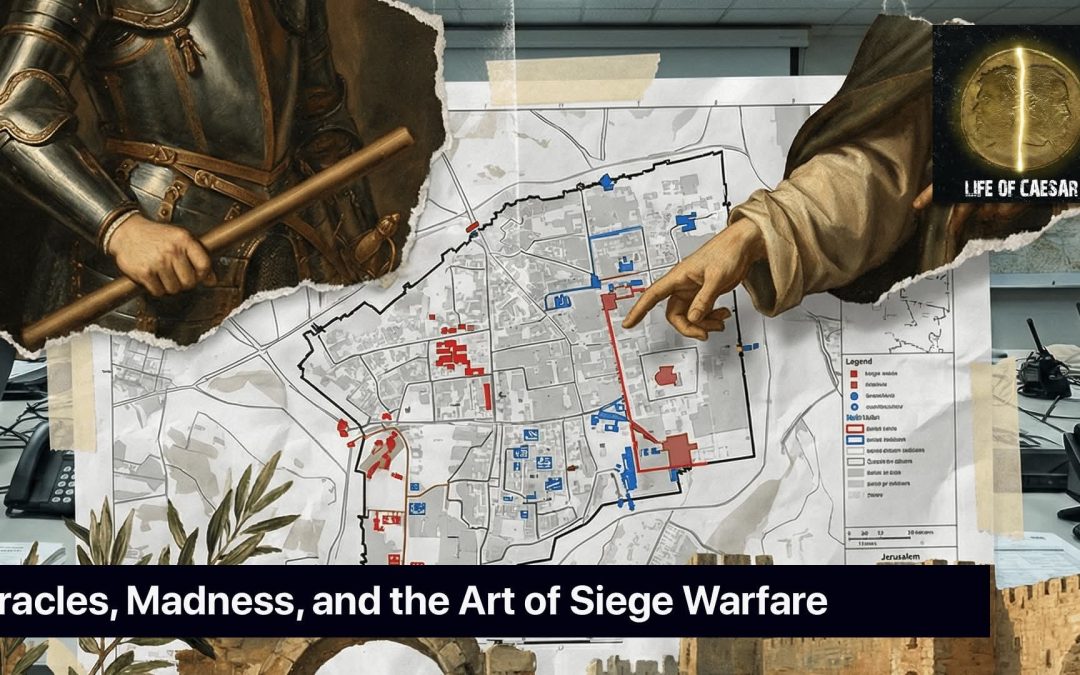
In Episode 10, Cameron and Ray pick up the siege of Jerusalem at a critical moment, with Titus narrowly escaping death yet again during reckless reconnaissance near the city walls. Using Josephus as their primary source, they explore how first-century historians casually attributed battlefield luck to divine intervention, contrasting Roman discipline with Jewish disunity and opportunism. The discussion widens into a forensic examination of how ancient writers framed “miracles,” how chaos and disorder functioned as asymmetric warfare, and why disciplined armies struggle against opponents who refuse to fight by the rules. Along the way, the conversation detours into the political realities behind Josephus’ writing, Roman siege tactics, and the flattening of Jerusalem’s surrounding terrain in preparation for encirclement.
The episode then pivots sharply into the internal Jewish conflict within the city itself, examining the Zealots, Sicarii, and competing power factions whose infighting proves as destructive as the Roman legions outside the walls. Cameron connects these historical figures to later New Testament narratives, questioning how stories of zeal, rebellion, and mistaken identity were repurposed by early Christian authors. The episode closes with Jerusalem momentarily unified but fundamentally fractured, as Titus begins weighing starvation and siege over direct assault, setting the stage for the catastrophe to come.
If you're seeing this message, it means you aren't logged in as a subscriber. If want to listen to the premium episodes of the series - hundreds of episodes on the lives of Julius, Augustus, Tiberius, Claudius, Caligula, Claudius, Nero and the Year of the Four Emperors - you’ll need to become one of our subscribers. REGISTER NOW to render unto Caesar the things that are Caesar's (thank you, Jesus, for that quote).